No and None for Kids: A Practical Guide
No comes before a noun; none replaces one or means zero. A child can say, “There are no pencils,” then answer “How many pencils are there?” with “None.” No and None for Kids: A Practical Guide teaches this contrast through rules, examples, errors, and exercises. Teach complete sentences; then ask whether a noun follows.
📥 No and None for Kids: Practice Pack
Sentence models, clear rules, independent exercises, and home practice
Leave your email — we'll send the PDF to your inbox.No spam — the PDF plus one short reminder. Unsubscribe anytime.
What Children Need to Understand About No and None
Both words express zero but play different roles. No describes a noun: “no books,” “no juice,” or “no time.” None replaces one: “We looked for books, but there were none.”
Ask: “Does a noun come next?” Yes means no. A previously mentioned or understood noun means none. This test anchors No and None for Kids: A Practical Guide and works with countable and uncountable nouns.
Children may hear other negative patterns in home languages. Present English as an additional pattern, never a correction of their thinking. Compare complete sentences aloud: “There is no milk” and “There is none.”
Try a two-card sorting game. Write six sentences showing a noun after the gap and six whose noun appeared earlier. Children hold up NO for “There are ___ pencils” and NONE for “I wanted a pencil, but there were ___.” After each choice, ask them to point toward the noun or identify its earlier appearance. Substitution becomes visible, not abstract.
A common mistake sounds like “none milk” or “none toys.” Use a quick expansion: “no + noun” needs no; a standalone substitute needs none. Practise four examples at a time, then mix both forms through a short dialogue.
How No and None Work in a Sentence
No, a determiner, sits before a noun. It works with singular, plural, and uncountable nouns: “There is no chair,” “There are no chairs,” and “There is no water.” Never insert an article or another determiner between no and its noun.
The table offers a visual check; spoken pairs build recall. Ask, “How many clean cups are there?” Offer “There are no clean cups” and “There are none.” Both work: the first keeps the noun; the second replaces it.
No and None for Kids: A Practical Guide distinguishes determiner no from answer No. In “No, we are not late,” it answers a question. In “We have no homework,” it describes homework.
Rules and Examples Children Can Reuse
Use none of before a known group: “none of the games,” “none of these shoes,” “none of our neighbours,” or “none of them.” The word after of identifies that group. “None of games” remains incorrect because no defined group appears.
Singular and plural verbs can follow none of. A plural verb fits “None of the windows are open.” A singular verb can stress “not one”: “None of the food is ready.” Beginners can match the verb with the noun and intended meaning.
No and None for Kids: A Practical Guide uses three reusable frames: “There is no + singular or uncountable noun,” “There are no + plural noun,” and “There is or are none.” Change one element per turn: “There are no socks,” “There are no plates,” and “There are none.”
Common Mistakes and Clear Corrections
Never place a noun after none: change “There are none pencils” into “There are no pencils” or “There are none.” Replace incorrect no of in “No of the boxes are empty” with “None of the boxes are empty.”
Children may combine negatives: “We don’t have no paper.” Standard written English uses “We have no paper” or “We don’t have any paper.” Some dialects consistently use double negatives, so teach school usage without criticising family speech.
Use no one or nobody for people generally: “Nobody is waiting outside.” Use none for a known group: “We invited the older children, but none could come.” This contrast prevents phrases such as “none people.”
Try a three-column correction sort labelled no + noun, none, and none of + determiner + noun. Give six cards, including “We have no glue,” “None is left,” and “None of the glue sticks are new.” Ask your child to place each card, underline the word after the negative, and explain the choice. Then change one element: “no glue sticks” becomes “none,” not “none glue sticks.”
Watch for answers such as “How many crayons remain?” — “No.” Quantity questions need “None” or “No crayons”; reserve “No” for a yes-or-no question. Run a four-prompt oral drill: mix two quantity questions with two yes-or-no questions. Pupils answer fully before shortening each response.
Practice Using No and None at Home
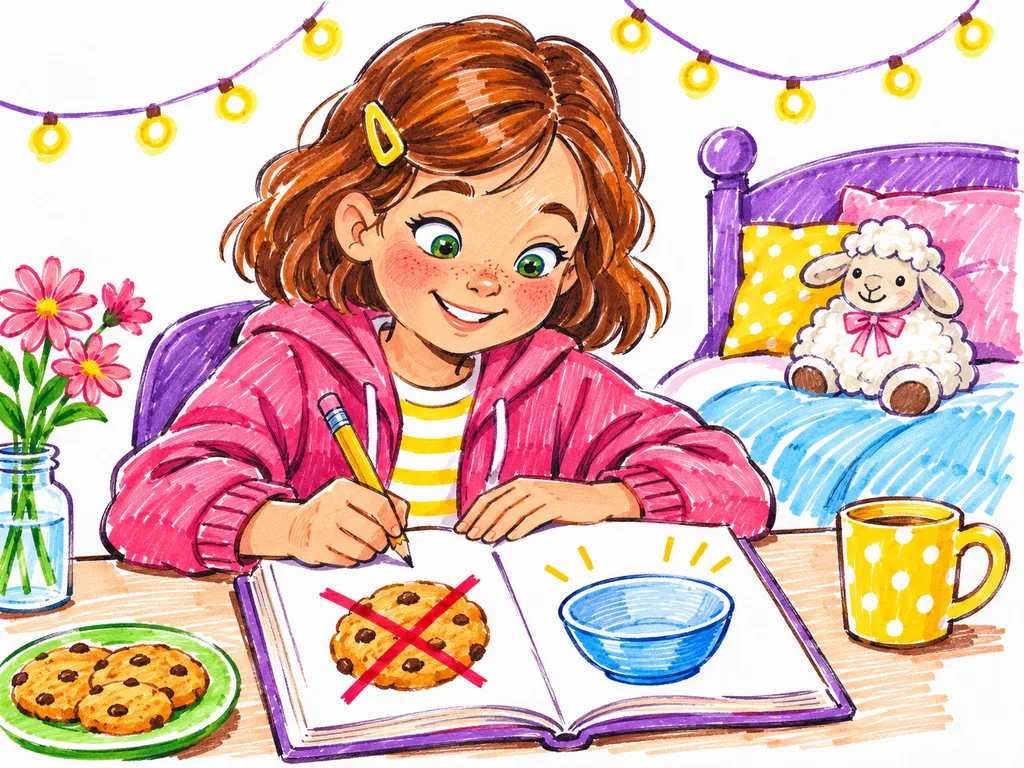
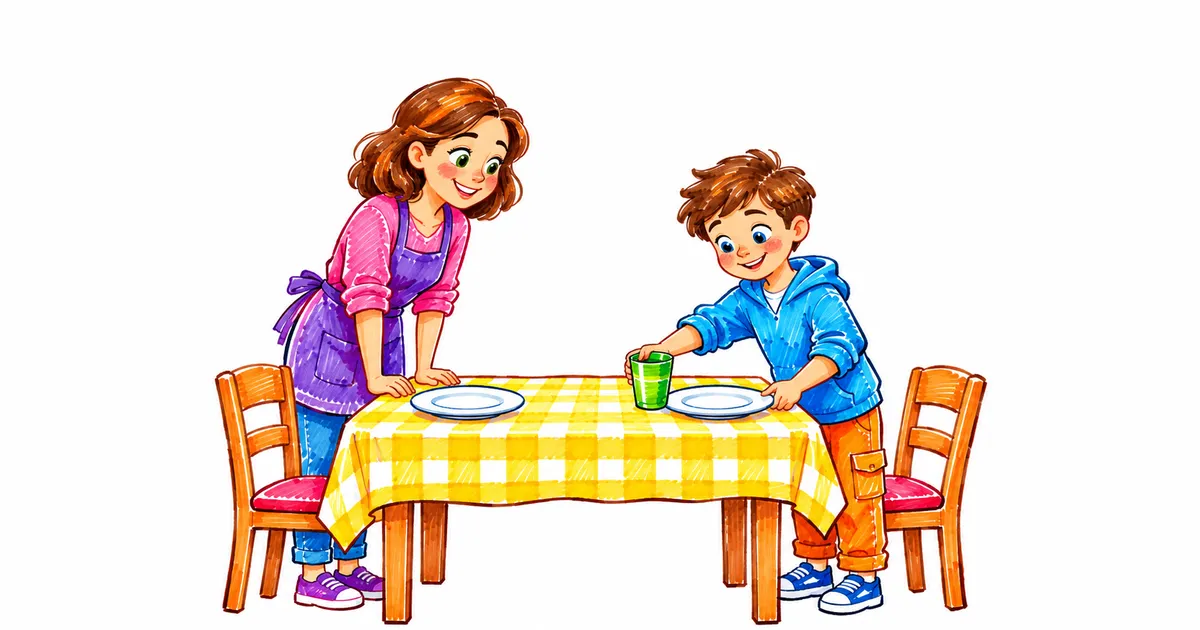
Use visible objects. Put three spoons and no forks on a table. Ask, “How many forks are there?” Accept “There are no forks” and “There are none.” Change objects, then repeat. Short, accurate exchanges teach patterns better than unexplained answers.
Choose No or None
Complete each sentence.
1. There is ___ bread in the basket.
2. We searched for shells, but found ___.
3. ___ of these cups is clean.
4. There are ___ clouds in the sky.
5. How much paint is left? ___.
Answer key: 1. no; 2. none; 3. None; 4. no; 5. None.
No and None for Kids: A Practical Guide feels easier when children explain every choice. Ask, “Why no?” Answer: “The noun comes next.” Ask, “Why none?” Answer: “It replaces the noun.” Link each reason directly with the practice sentence.
Change the Sentence
Rewrite each sentence without changing its meaning.
1. We do not have any crayons.
2. There are no clean towels.
3. None of the doors are locked.
4. How many tickets remain? None.
Possible answers: 1. We have no crayons. 2. There are none. 3. No doors in the group are locked. 4. No tickets remain.
Finish with a search game: find something with no label, an empty box, or a shelf where none of the books are blue. During LearnLink lessons, experienced tutors use focused questions and sentence frames until children apply each form independently.
When a word has several meanings or pronunciations, Cambridge Dictionary is a useful check before turning it into child-friendly examples.
Frequently Asked Questions About No and None
What Is the Simplest Difference Between No and None?
No comes before a noun; none replaces one or refers to a known group. Compare “There are no biscuits” with “There are none.” No and None for Kids: A Practical Guide asks, “Does a noun come next?” If yes, use no. An understood noun needs none.
Can None Be Followed Directly by a Noun?
No. Standard English rejects “none books” and “none water.” Put no before the noun: “no books” or “no water.” Use none alone—“We have none”—or none of before a defined group: “None of the books is new.”
Should Children Use a Singular or Plural Verb After None?
Both can be correct. “None of the water is cold” takes a singular verb because water is uncountable. “None of the players are ready” takes a plural verb for multiple players. Notice the noun after of, then choose a verb matching the meaning.
How Can My Child Remember the Rule?
Use this reminder: “No keeps the noun; none takes its place.” Practise pairs such as “We have no bananas” and “We have none.” Five spoken examples using familiar objects make one round. Repeat later with different nouns instead of asking your child to memorise a long explanation. No and None for Kids: A Practical Guide turns this reminder into a reliable sentence check.
Want to see how these ideas work in a real lesson — try a LearnLink trial lesson.
Stay updated on our latest tips and resources by following us on Instagram LearnLink.