Names of Big Cats in English for Kids
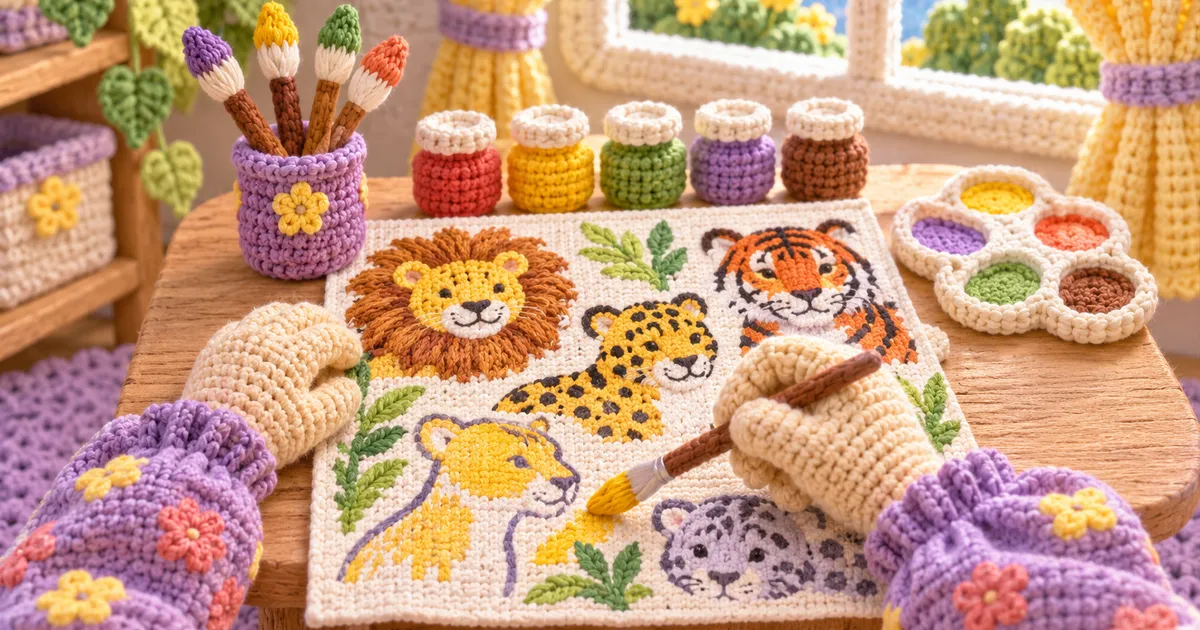
Names of Big Cats in English for Kids introduces eight core words: lion, tiger, leopard, jaguar, snow leopard, cheetah, cougar, and clouded leopard. The guide explains meaning, sentence use, and practice through sorting, movement, drawing, and conversation. Children need not learn all eight at once. A five-year-old may start with lion, tiger, and cheetah; an older child can compare coat patterns, habitats, and word forms. The goal is confident use, not a rushed memory test.
Eight Core Names and Useful Phrases
In everyday English, big cat can mean any large wild cat. The narrower biological group Panthera contains five animals taught here. A first lesson on Names of Big Cats in English for Kids can follow the broader everyday meaning.
many adult males have a mane; lions may live in a group called a pride.
a large cat with dark stripes on an orange, white, or pale coat.
a strong climber with dark marks called rosettes.
a stocky spotted cat whose rosettes often contain central dots.
a pale mountain cat with a thick coat and long tail.
a slim cat with solid spots and dark lines beside its eyes.
a plain-coated cat also called a puma or mountain lion.
a forest cat with large, cloud-shaped patches.
Teach the article with each noun: a tiger, not just tiger. Add one phrase at a time: a striped tiger, a spotted jaguar, or a cougar in the mountains.
Using Big-cat Words in Clear Sentences
When practising Names of Big Cats in English for Kids, use familiar frames: It is…, It has…, It can…, and It lives…. Children reuse known grammar while adding animal words.
- It is a lion.
- The tiger has stripes.
- This spotted cat can climb.
- The jaguar has dark rosettes.
- The pale mountain cat lives in the mountains.
- The cheetah has solid spots.
- A cougar has a plain coat.
- The cloud-patterned forest cat has large patches.
Make each statement a short exchange: What is it? — It is a cheetah. Ask for one clue: How do you know? — It has spots and dark facial lines. Accept a one-word answer before requesting a full sentence.
A Simple Teaching Sequence
Begin with pictures showing the whole animal. Introduce three words, check recognition, and add more when your child points to the correct picture without copying your voice.
- Look: say the word once while showing the animal.
- Listen and point: place two or three pictures down and name one.
- Say: let your child name a picture or finish “It is a…”
- Use: ask for a clue, comparison, or short sentence.
Review the words another day with a new task. A drawing game, toy-animal hunt, or spoken riddle shows whether each word works beyond one picture.
Quick Big-cat Riddle
Choose an animal without naming it. Give two clues: “It has stripes. It is orange and black.” Your child answers, “It is a tiger,” then chooses another animal and gives clues.
Activities for Different Ages
For school-age kids, use three or four animals with movement. Children can prowl like a lion, stretch like a climbing leopard, or run on the spot like a cheetah. Say each word during the action, then ask the child to choose its picture.
For school-age kids, Activities for Names of Big Cats in English for Kids can include sorting cards into stripes, spots, and plain coat. Children can draw an imaginary zoo map and place each cat in a suitable space: “The snow leopard is near the rocks.”
For school-age kids, compare the everyday meaning of big cat with the narrower biological group. Request a three-sentence profile covering appearance, habitat, and one comparison: “A jaguar is stockier than a cheetah. It has rosettes. Some rosettes have dots inside.”
How to Tell Spotted Cats Apart
Leopards, jaguars, and cheetahs can look alike in small pictures. Focus on pattern and body shape instead of asking a child to guess from colour.
Use the table for speaking, not testing. Cover the names, show one picture, and let your child find two clues. Real coats vary, so careful description matters more than perfect identification from every image.
Common Mistakes and Simple Fixes
Children may use one familiar name for every spotted cat. Place a leopard, jaguar, and cheetah together and model three contrasts: rosettes without dots, rosettes with dots, and solid spots. Keep the first comparison visual and brief.
Another error is using the singular after a number: two tiger. Recast it naturally: “Yes, two tigers.” For both two-word cat names, add the plural ending to the last word.
Do not present one accent as the only correct model. English speakers pronounce jaguar in more than one accepted way. Across LearnLink lessons, our tutors develop understandable speech while helping children hear accent differences.
- Choose five big cat names and say each one slowly together.
- Match lion, tiger, leopard, jaguar, and cheetah pictures with written labels.
- Compare two animals using simple clues about spots, stripes, and manes.
- Correct one mixed-up name by pointing to the matching picture.
- Review Names of Big Cats in English for Kids with a picture book.
When a word has several meanings or pronunciations, Cambridge Dictionary is a useful check before turning it into child-friendly examples.
Frequently Asked Questions
How Many Big-cat Names Should a Child Learn at Once?
For a beginner school-age kids, start with three or four: lion, tiger, cheetah, and leopard. Add the remaining four in later sessions. A child is ready for more after recognising the current words in different pictures and using at least one in a short phrase.
Are Cheetahs and Cougars Considered Big Cats?
Books, museums, and everyday conversation often call them big cats because they are large wild cats. In narrower biological usage, big cats may mean members of the genus Panthera. Cheetahs and cougars belong to other genera, so older children should learn both uses.
How Can We Practise When English Is Not Our Home Language?
Explain the task in a language your child knows, then keep the target phrase in English: a tiger, It has stripes, or Where is the lion? Multilingual children need not hear every explanation in English. Pictures, repeated sentence frames, and short daily practice limit translation.
Should Children Learn Spelling or Speaking First?
For Names of Big Cats in English for Kids, young beginners benefit from hearing, recognising, and saying each name before copying it. Then match English to a written label. Older children can study spelling immediately, including the plural forms lions, tigers, and snow leopards.
Finish with a three-step review: show three pictures, ask your child to name each cat, then request one full sentence about its pattern or habitat. Repeat this five-minute review on three different days.
Want to see how these ideas work in a real lesson — try a LearnLink trial lesson.
Stay updated on our latest tips and resources by following us on Instagram LearnLink.