Monkeys and Apes in English for Kids
Start with six to eight animal words and one sentence frame. Most monkeys have tails; living apes do not. Monkeys and Apes in English for Kids: Words and Activities combines animal names, body vocabulary, action verbs, and speaking games. Plan four five-minute sessions: name, point, move, then describe. Younger learners can copy actions; confident speakers can compare two animals and explain the difference.
Core Words and Useful Phrases
For Monkeys and Apes in English for Kids: Words and Activities, begin with the eight animal names below. Say each word while your child studies a picture. Mix the pictures, then ask, “Where is the gorilla?”
Add body and habitat words children can point to: tail, fur, face, hand, foot, arm, tree, branch, and forest. Practise descriptors such as small, large, loud, quiet, quick, strong, brown, and black.
Action verbs turn labels into speech. Practise climb, swing, jump, sit, walk, eat, hold, carry, peel, and groom. Try short frames: “It can swing,” “It has brown fur,” “The monkey is climbing,” and “The ape is holding fruit.”
How Monkeys and Apes Differ
A monkey is not an ape. A tail is the first clue: most monkey species have one, but it may be short or hard to see. Living apes do not. Gorillas, chimpanzees, bonobos, orangutans, and gibbons are apes; baboons, macaques, capuchins, and marmosets are monkeys.
Use the table as a speaking guide, not a fact test. Show one animal and ask, “Can you see this feature?” Then ask, “Is it a monkey or an ape?” Accept one word before modelling a full answer: “It is an ape because this feature is absent.”
Examples in Everyday English
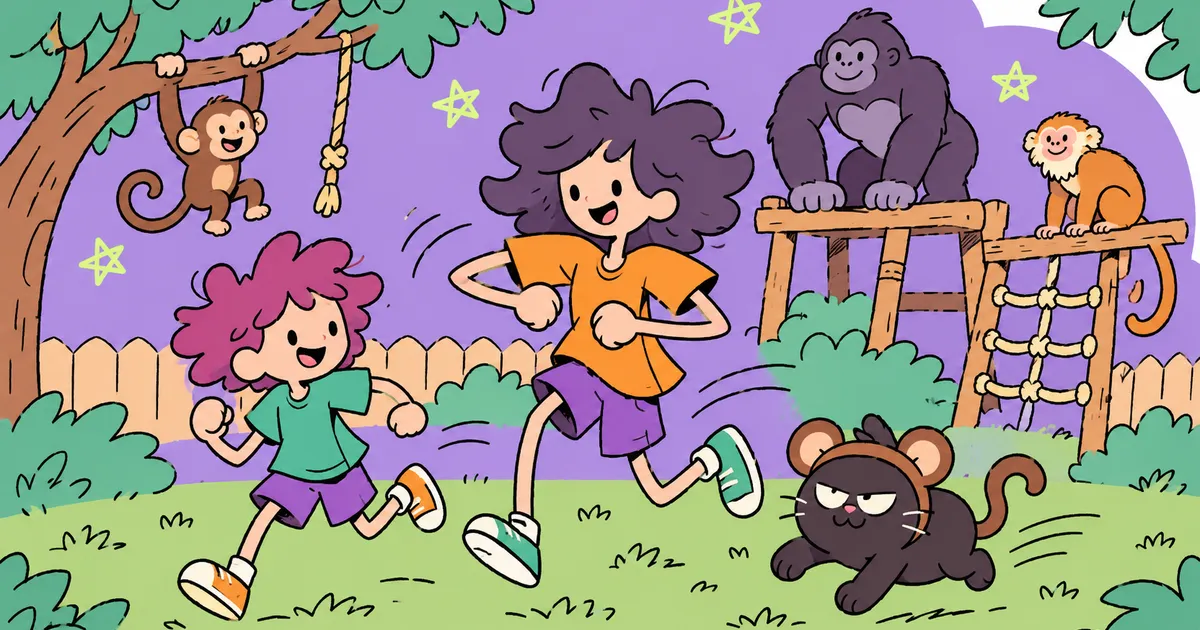
Monkeys and Apes in English for Kids: Words and Activities works best when each word appears in a short sentence. Keep grammar predictable: “The gibbon swings from branch to branch,” “The gorilla sits near a tree,” and “The orangutan holds fruit in its hand.”
Build a conversation with paired questions and answers. Ask, “What is it?” and answer, “It is a chimpanzee.” Ask, “What can it do?” and answer, “It can climb.” Continue with “Where is the monkey?”, “What colour is its fur?”, and “Does it have a tail?”
A multilingual child may know the animal’s name in another language first. Show the picture, say the English word, and place it in a sentence. Translation is optional; connect the English sound with an image or action.
Activities for Different Ages
Use Monkeys and Apes in English for Kids: Words and Activities as a flexible theme. For pre-school-age learners, place animal pictures on the floor. Say “Jump to the gorilla” or “Point to the monkey.” Let the child copy climbing, swinging, sitting, and peeling.
School-age kids can sort pictures into monkeys and apes. Use the frames “It is a…,” “It has…,” and “It can….” Then give three clues: “It is an ape. It has orange-brown fur. It can climb.” The answer is orangutan.
Confident writers can compare two animals in four sentences: “A baboon is a monkey, but a gorilla is an ape. Their bodies differ. Both can walk on the ground. A gorilla has longer arms.” Check accurate English before adding facts.
Simple Ways to Practise
Follow a four-day routine. On day one, name and point. On day two, add an action. On day three, ask a question. On day four, let your child give clues or correct a false sentence. Five focused minutes daily covers one small word set.
The clue challenge checks meaning, sentence patterns, and listening without a formal test.
Quick Clue Challenge
Read each clue: “I have no tail. I am large and strong.” “I am a monkey with a long face.” “I am an ape with orange-brown fur.” “I move from branch to branch.” Possible answers are gorilla, baboon, orangutan, and gibbon. More than one answer may fit a broad clue; ask your child to explain the choice.
Pictures from books, zoo websites, or toy animals support this routine. During LearnLink lessons, experienced tutors model vocabulary through questions, descriptions, and short exchanges. At home, reuse two familiar cards before adding new words.
Common Language Mistakes
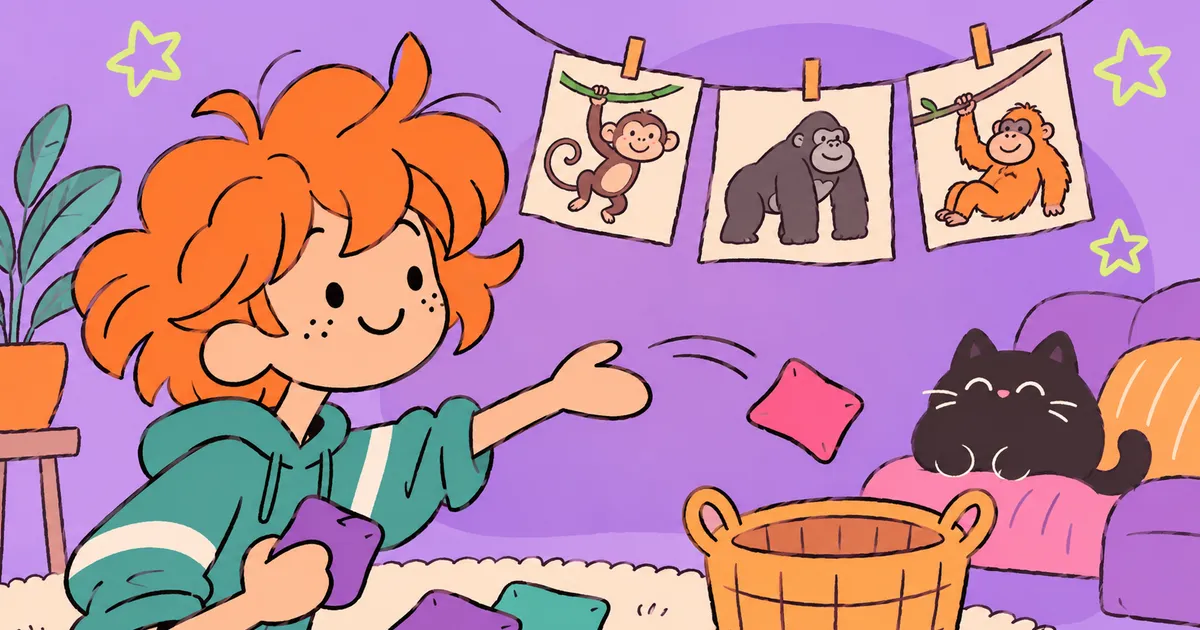
The first mistake is calling every primate a monkey. Teach monkey and ape as separate words from the start. Skip the science lesson; the tail clue gives both terms a practical distinction.
Watch the verb after can. Say “A monkey can climb,” not “A monkey can climbs.” With has, use “It has a tail,” not “It have a tail.” Repeat the frames with other animals until the grammar feels familiar.
The plural of monkey is monkeys, not monkies. Use an before ape and orangutan, but a before gorilla and chimpanzee. Animal names start with lowercase letters unless they begin a sentence.
- Show one monkey and one ape picture, then name each animal aloud.
- Compare two pictures, and ask your child to describe visible differences.
- Read one animal book, correcting monkey and ape labels together.
- Sort four picture cards into monkey and ape groups using clear labels.
- Repeat each corrected sentence, emphasizing the animal name without criticizing mistakes.
When a word has several meanings or pronunciations, Cambridge Dictionary is a useful check before turning it into child-friendly examples.
Frequently Asked Questions
What Is the Easiest Way to Explain the Difference Between a Monkey and an Ape?
Start with one visible clue: most monkeys have a tail; living apes do not. Show one picture from each group and ask the child to identify the difference. Then compare a macaque with a gorilla. A few monkey species have only a short tail or none that is readily visible.
How Many New Animal Words Should a Child Learn at One Time?
For Monkeys and Apes in English for Kids: Words and Activities, six to eight new items form a practical starting set. Mix animal names, body words, and actions. Keep two familiar words in later sessions, then add more after the child recognises the current set and uses several items in short sentences.
Should We Translate the Words into Our Home Language?
Translation can help when a picture or action does not show the meaning. Say the home-language word once, then return to the English picture, sound, and sentence. Aim for a direct link between the English word and its meaning, not a ban on other languages.
How Can My Child Remember Difficult Spellings Such as Chimpanzee?
Break the word into spoken parts, say it slowly, and build it with letter cards or coloured chunks. Then place the whole word in a sentence. Keep spelling separate from speaking and limit practice to five minutes so concern about letters does not interrupt confident speech.
Finish with a four-step review:
- Choose six to eight words.
- Practise one sentence frame for five minutes.
- Ask three picture-based questions.
- Repeat the set on four consecutive days.
If your child needs steady speaking practice, start small — choose a trial lesson.
Stay updated on our latest tips and resources by following us on Instagram LearnLink.